

The people's voice of reason


The people's voice of reason
Sorted by date Results 26 - 50 of 414
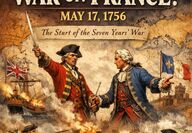
The Opening Shot of a Global Conflict That Redefined North America On May 17, 1756, Great Britain formally declared war on France, transforming a series of frontier skirmishes into what many historians call the first true world war. Known globally as the Seven Years' War, and in North America as the French and Indian War, this conflict redrew borders, toppled empires, and set the stage for the American Revolution. Rivalry on a Collision Course By the mid‑18th century, Britain and France were l...
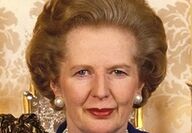
On May 3, 1979, British political history changed forever. Following a decisive Conservative victory in the general election, Margaret Thatcher was invited by Queen Elizabeth II to form a government-making her the first woman to serve as Prime Minister of the United Kingdom. Her rise marked a turning point not only for Britain but for global politics, as she became one of the most influential and controversial leaders of the late 20th century. Thatcher's election ended years of economic...

**** This was originally published in 2022, but since today is Cinco de Mayo we republished it in the current issue of the Gazette***** May was an interesting month for our neighbors to the South. This year, Mexico commemorates the 200th anniversary of the coronation of Emperor Agustín I, and the 160th anniversary of the Battle of Puebla. These seemingly obscure events are vital to a complete understanding of the Mexican experience. As a colony of Spain, the internal government of Colonial...
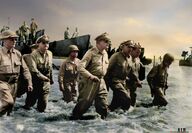
On April 10, 1951, one of the most consequential civil‑military decisions in American history unfolded when President Harry S. Truman relieved General of the Army Douglas MacArthur of his command during the Korean War. The action ended the tenure of one of the nation's most celebrated military leaders and ignited a fierce national debate over presidential authority, military strategy, and the limits of dissent within the chain of command. A War at a Crossroads By early 1951, the Korean War h...
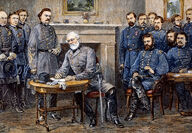
APPOMATTOX COURT HOUSE, Va. - On the morning of April 9, 1865, the American Civil War reached the moment that generations would later recognize as its emotional and symbolic end. The surrender of General Robert E. Lee's Army of Northern Virginia to Lieutenant General Ulysses S. Grant did not instantly stop the fighting across the South, but it shattered the Confederacy's strongest army and signaled that the long, brutal conflict was drawing to a close. The events of that day - the final battle,...
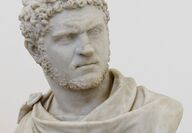
On April 8, 217 AD, one of Rome's most controversial emperors met a sudden and violent end on a dusty road near Carrhae. Marcus Aurelius Severus Antoninus - better known to history as Caracalla - was assassinated while traveling to visit a local temple. His death ended a turbulent reign marked by brutality, sweeping reforms, and military ambition, and it ushered in a new and uncertain chapter for the Roman Empire. A Reign Defined by Contradiction Caracalla, son of the emperor Septimius Severus,...

On April 9, 1865, Robert E. Lee surrendered the Army of Northern Virginia, one week prior to almost certainly the most tragic Easter in Southern history. Joseph Johnston, Richard Taylor, and other Confederate commanders soon followed. After an unsuccessful four year effort to gain independence, the South faced a bleak future. The Union’s total war policy had added insult to injury by making war on non-combatants and property. Abraham Lincoln and U.S. Grant approved this strategy, which r...
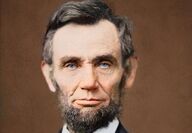
In the early morning hours of April 15, 1865, the United States awoke to its darkest moment since the Civil War began. At 7:22 a.m., President Abraham Lincoln died from a gunshot wound inflicted the night before by actor John Wilkes Booth while attending a performance of Our American Cousin at Ford's Theatre in Washington, D.C. The assassination came just six days after General Robert E. Lee's surrender at Appomattox Court House, which had effectively ended four years of brutal conflict....

In April 1776, as tensions with Great Britain escalated into full-scale war, North Carolina took a bold and historic step toward independence. The Halifax Resolves constituted the first official action by an American colony authorizing its delegates to vote for independence. They were adopted 250 years ago by the Fourth Provincial Congress of North Carolina while meeting in Halifax, a town along the Roanoke River. The key passage of the Resolves empowered delegates: "to concur with the...

The popular British historian of the PBS television series, "Lucy Worsley Investigates", turns her focus towards The American Revolution in Season Three. While here in the USA a lot of Christian and independent film studios have and are releasing feature films to commemorate the 250th Anniversary of The Declaration of Independence this summer, in Season Three, Dr. Worsley unabashedly states that she is looking at The American Revolution from "The British Perspective." With the two-part series...

"Revolutionary America", the first feature-length documentary produced by the studios of Hillsdale College, is set for release in theaters nationwide on May 31st. The focus of the documentary is on The Declaration of Independence and how the founders of the USA risked their "lives, fortunes, and sacred honor" when they signed a document that many believed at the time was "our own death warrants." For in their quest for independence, the patriots were "fighting the biggest world power in...
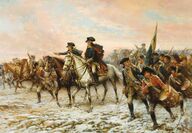
The first major victory for the Continental Army occurred 250 years ago on March 17, 1776, when the British evacuated Boston. Following the fighting at Lexington and Concord, thousands of colonial militiamen surrounded the British army when they retreated to Boston. The Royal Navy maintained supply lines, and while the colonial forces effectively contained the British, they lacked the manpower to liberate Boston from British occupation. As the siege of Boston began, George Washington assumed com...
On Easter Sunday, April 1, 1945, as much of the world prayed for peace, the United States launched the largest amphibious assault of the Pacific War - the Battle of Okinawa. It was the final stepping stone toward mainland Japan, and it would become one of the bloodiest battles in human history. The Strategic Importance of Okinawa Located just 350 miles from the Japanese mainland, Okinawa was seen as the ideal staging ground for a full-scale invasion of Japan. Its capture would give the Allies a base for airfields, naval operations, and...

History of currency crises: The impossible trinity and early warning signals This report by OANDA unpacks the mechanics of currency crises through the Impossible Trinity, highlighting how tensions between exchange rate stability, capital flows, and monetary policy create systemic vulnerabilities. Drawing lessons from the U.K. Black Wednesday 1992, the Asian Financial Crisis 1997, and the Russian Ruble Crisis 1998. The history of the international monetary system is defined by periodic...
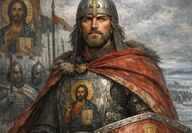
On April 5, 1242, a frozen lake in the far north became the stage for one of medieval Europe's most dramatic and consequential battles. Known to history as the Battle on the Ice, the clash on Lake Peipus between the forces of Prince Alexander Nevsky of Novgorod and the Teutonic Knights halted Germanic expansion into Russian lands and reshaped the balance of power in the Baltic region. Though fought nearly eight centuries ago, the battle remains a defining moment in Russian historical memory - a...
On April 6, 1917, after nearly three years of trying to remain neutral in a conflict tearing Europe apart, the United States crossed a historic threshold. With a decisive vote in Congress, President Woodrow Wilson signed a declaration of war against Germany, bringing the nation into World War I and reshaping the global balance of power for the century to come. The decision marked the end of America's long‑standing tradition of avoiding entanglement in European wars. It also signaled the rise o...
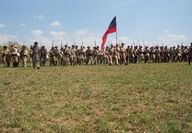
The morning of April 7, 1862, broke over the Tennessee woods with a gray, uneasy stillness-an eerie contrast to the thunderous violence that had consumed the previous day. The Battle of Shiloh, one of the first truly large‑scale and shockingly bloody engagements of the American Civil War, was entering its second and decisive day. By sundown, Union forces would drive the Confederates from the field, securing a hard‑won victory that reshaped the Western Theater and shattered any lingering illusion...
On March 29, 2004, a quiet but profound shift reshaped the strategic map of Europe. In a ceremony in Washington, D.C., seven nations-Bulgaria, Estonia, Latvia, Lithuania, Romania, Slovakia, and Slovenia-formally joined the North Atlantic Treaty Organization as full members. It was the largest single expansion in NATO's history, and it marked a symbolic and strategic milestone: the moment when much of the former Soviet sphere anchored itself decisively to the Western security architecture. The...

A woman at a bingo parlor and a kid holding a Kiss birthday cake texanwill/Wander_Globe // Reddit 33 Photos That Show What Life Looked Like in 1979 1979 had a lot going on. The Iran hostage crisis. Three Mile Island. The Soviets moving into Afghanistan. But most people weren't living inside the headlines. They were loading the coal furnace before school, sitting on the stoop with the cousins, and trying to talk their mom into a Kiss cake for their birthday. This is that 1979. The one that lived...
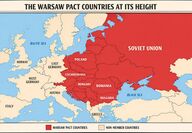
On March 31, 1991, the Warsaw Pact-the military alliance that had once bound the Soviet Union and its Eastern European satellites into a unified armed bloc-effectively ceased to exist. What ended that day was not merely a treaty, but the strategic architecture of the Cold War itself. The dissolution marked the symbolic and practical collapse of Soviet power in Eastern Europe, clearing the way for a new European order and the eventual expansion of NATO into territory once dominated by Moscow. A...
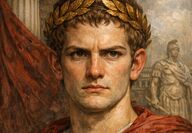
March 16, A.D. 37 - The Day Gaius "Caligula" Caesar Took the Throne On March 16, A.D. 37, Rome awoke to a new emperor-Gaius Julius Caesar Augustus Germanicus, better known to history by the nickname Caligula, "Little Boots." His rise followed the death of his great‑uncle and adoptive grandfather, Emperor Tiberius, ending one of the most secretive and repressive reigns in Roman history and ushering in a period that began with extraordinary public hope but soon descended into infamy. Caligula's a...
Tsar Nicholas II’s abdication on March 15, 1917, marked the collapse of more than three centuries of Romanov rule and opened the door to one of the most turbulent political transitions in modern history. His decision—made amid military disaster, economic breakdown, and revolutionary unrest—set in motion a chain of events that reshaped Russia and ultimately the world. The Road to Abdication By early 1917, Russia was buckling under the strain of World War I. Food shortages, battlefield losse...
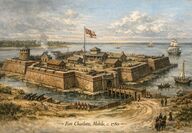
On March 14, 1780, the Gulf Coast became a decisive front in the American Revolutionary era as Spanish forces under Governor Bernardo de Gálvez captured Fort Charlotte in Mobile, Alabama. This victory-achieved after a two‑week siege-eliminated the last British frontier post capable of threatening New Orleans, securing Spain's hold on the western Gulf and reshaping the balance of power in the Southeast. The Strategic Setting on the Gulf Coast By 1780, the American Revolution had expanded far be...
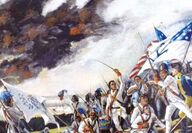
In 1776 - 250 years ago - General George Washington made a decision that was both pragmatic and radical for its time when he integrated the Continental Army, allowing free Black men and later some formerly enslaved men to serve alongside white soldiers. But rather than being driven by enlightened ideas or progressive principles, Washington’s command decision reflected practical military necessity, political calculation, and an evolving understanding of liberty. Before the Revolution, Black m...
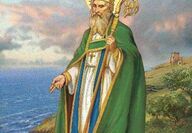
Today is not an official holiday, so most schools, businesses, and government offices will be open. However, it is the widely celebrated St. Patrick's Day holiday. On this date in 461 A.D. St. Patrick - one of the most effective missionaries in the history of Christendom - died. The American celebration of St. Patrick's Day is known for Celtic music, green clothes, parades, four-leaf clovers, lots of drinking, and all things Irish. That said, St. Patrick was a real historical person who had a...


